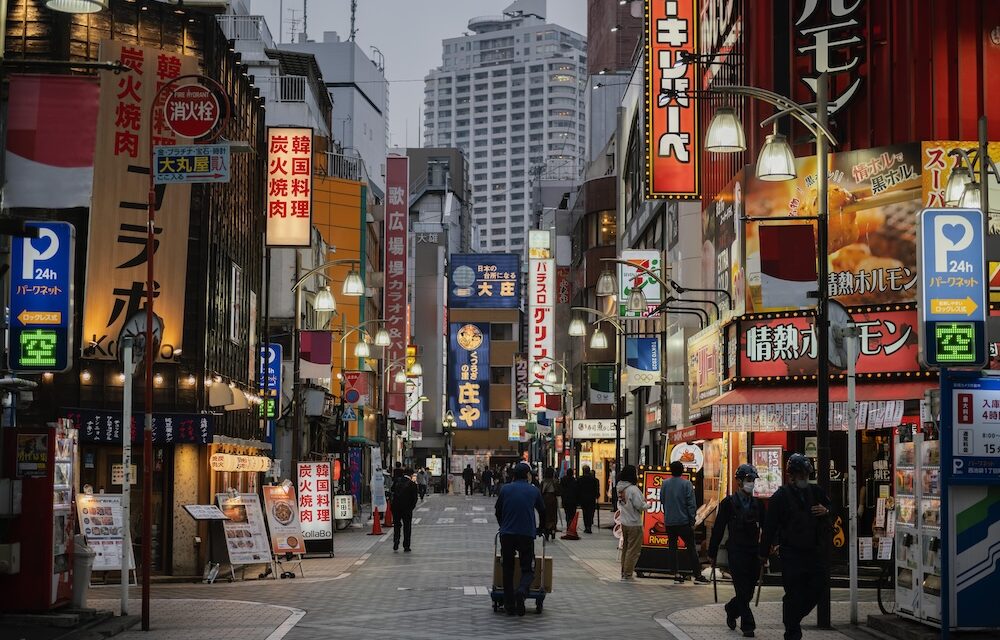
Japan is known for its precision and attention to detail, faces a significant labor shortage. With an aging population and low birth rates, the country is struggling to find enough workers to meet its needs. As the workforce dwindles, businesses are turning to artificial intelligence (AI) to bridge the gap. Let’s explore how AI is revolutionising Japan’s industries, from food production to farming and even language teaching.
AI in Japan’s Food Production: Keeping Quality High
In Japan, damaged or misshapen fruits and vegetables are hard to sell. This perfectionist approach extends to other products, like gyoza (Japanese dumplings). A single defective dumpling can be a major setback for companies like Osaka Ohsho, a leading producer of gyoza. During the pandemic, demand for gyoza surged, but the company couldn’t find enough workers to inspect each dumpling. The solution? AI-powered cameras.
In January 2023, Osaka Ohsho’s parent company, Eat&Holdings, opened a high-tech factory equipped with AI cameras to detect faulty dumplings. This innovation doubled the production speed, with two dumplings made every second. Moreover, AI cut the manpower needed on the production line by almost 30%. Additionally, Eat&Holdings launched I-Robo, an AI-powered cooking robot, in a Tokyo restaurant to address the shortage of chefs.
The Aging Population and Declining Workforce
Japan’s population of 124.35 million has been shrinking for 13 years. By 2040, the labor force is expected to decline by 12%, leaving the country short of 11 million workers. Furthermore, Japan has the world’s oldest population, with 29% of people aged 65 or above. The low birth rate exacerbates the problem, with only 758,631 babies born in the last year, the smallest number since records began in the 19th century.
Prime Minister Fumio Kishida warns that Japan is “on the brink of not being able to function.” This crisis has forced Japan to explore new solutions, and AI has become a key part of the strategy.
AI in Farming: Helping an Aging Industry
Farming is one of Japan’s fastest-aging industries, with an average farmer age of 68.4 years. AI is being used to identify diseases, pests, and weeds early. Nihon Nohyaku, a manufacturer of agricultural chemicals, developed an app called Nichino AI. This smartphone app allows farmers to take pictures of struggling crops and get a diagnosis, including the recommended pesticide.
The app has an accuracy rate of 70 to 80%, not as precise as human experts, but still valuable given the decline in agricultural specialists. Farmer Kensuke Takahashi, who has used the app for three years, believes AI is crucial for modernizing farming. He notes that while older farmers might be skeptical of new technologies, AI tools like drones for spraying pesticides can significantly improve efficiency.
AI in Language Learning: Supporting Teachers, Not Replacing Them
Japan’s efforts to increase English proficiency face challenges due to the shortage of qualified teachers. To address this, Ecumenopolis, a startup, developed an AI-powered online tool that allows users to have English conversations with an avatar for 15 minutes. This tool has been introduced in 50 schools across the country, including Narita Kokusai High School near Tokyo.
The AI tool tailors conversations to each student’s skill level, providing feedback on pronunciation, grammar, fluency, and vocabulary. However, despite its usefulness, teachers like Shoko Takiguchi find the AI-generated conversations unnatural. AI lacks the human touch and cannot replace teachers in classrooms.
AI in Government: Streamlining Administrative Tasks
Governments in Japan are also experimenting with AI. Yokosuka City in Kanagawa Prefecture uses AI chatbot ChatGPT to help with administrative tasks, such as transcribing and summarizing meetings. This innovation saves 22,700 hours of work annually, according to city officials. The national government’s Digital Agency, established in 2021, also uses AI to train its staff and improve efficiency in public administration.
Despite these advancements, experts like Masanori Kusunoki from the Digital Agency believe that AI won’t replace human workers. Instead, AI can help manage the growing workload and address the labor shortage.
Embracing AI for a Better Future
Japan has been exploring solutions to its labor shortage for over a decade, from employing robots to encouraging women, the elderly, and foreign workers to join the workforce. AI has proven to be a valuable tool, but it is not a complete replacement for human workers. As Japan embraces AI, it is doing so with caution, ensuring that the human element remains at the heart of its industries.